How to Prevent Gate Motor Failure in Arizona Heat
Gate motor failure in Arizona heat is caused by three things: undersized operators running above their thermal limit, dust accumulation blocking internal airflow, and lack of shade on operator housings exposed to direct summer sun. Prevention requires correct operator sizing at install, bi-annual cleaning and inspection, and shade structures or thermal insulation on exposed operators.
Why Arizona Heat Is Uniquely Hard on Gate Operators
Electric motors have a thermal limit — a maximum operating temperature above which internal components begin to degrade. When a motor runs consistently near or above that limit, insulation breaks down on windings, lubrication burns off faster than it can be replenished, and capacitors lose capacity more quickly than under normal conditions.
Phoenix’s summer ambient temperatures regularly reach 115 degrees Fahrenheit. A gate operator housing exposed to direct afternoon sun reaches internal temperatures significantly above ambient — 130 to 145 degrees is common. A motor rated to 130 degrees that sits in a housing reaching 140 degrees on a typical August afternoon is already running at its limit before a single gate cycle begins.
Add a high-cycle HOA application where the motor runs 100 or more times per day during peak heat, and the cumulative thermal stress explains why gate motors at unshaded Arizona installations fail faster than the manufacturer’s expected service life.
The Most Common Cause — Operator Undersizing
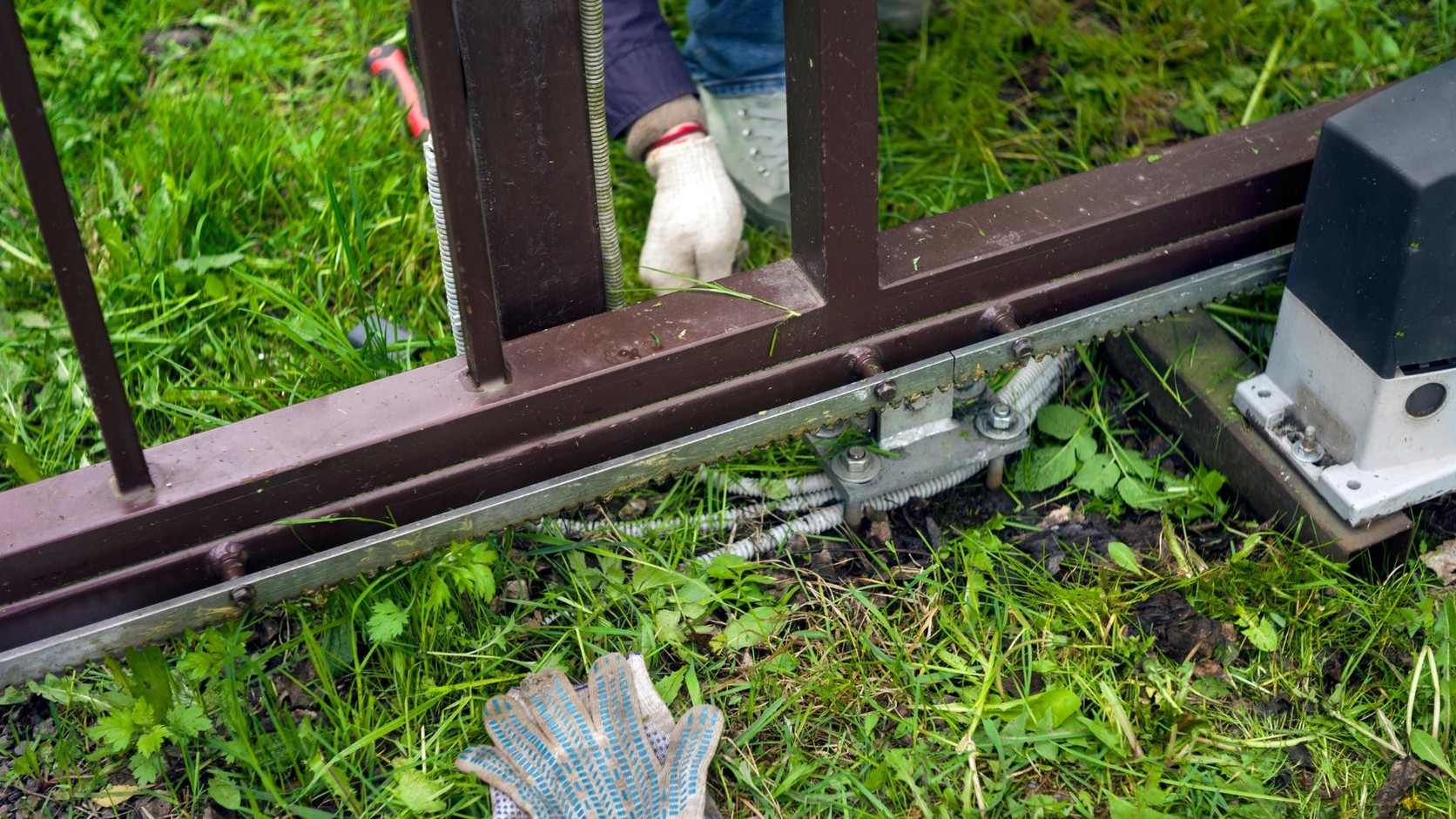
An undersized gate operator works harder than a correctly sized one for every cycle. A motor rated for gates up to 400 pounds driving a 500-pound gate draws more current, runs hotter, and accumulates more wear per cycle than a properly matched operator.
Undersizing is common when properties try to reduce installation cost by specifying a smaller operator, or when a DIY or less experienced installer does not accurately assess gate weight. In a moderate climate, the undersized motor might run for years before the cumulative stress causes failure. In Arizona, the margin for error is much smaller.
ParkPro specifies operators based on gate weight with a safety margin — never at the rated limit. This single decision has a significant impact on how long the system lasts in the Valley’s heat.
Dust Accumulation — The Silent Killer
Arizona’s dust storms are legendary. The fine particulate produced by haboobs and everyday desert wind works into every gap in an operator housing. Inside the motor housing, dust accumulates on circuit boards, clogs cooling vents, and coats motor windings.
Dust on circuit boards acts as an insulating layer that traps heat around components. A board that would normally dissipate heat adequately runs hotter when coated in dust — accelerating component failure. Cooling vents blocked by dust accumulation reduce airflow through the housing, compounding the problem.
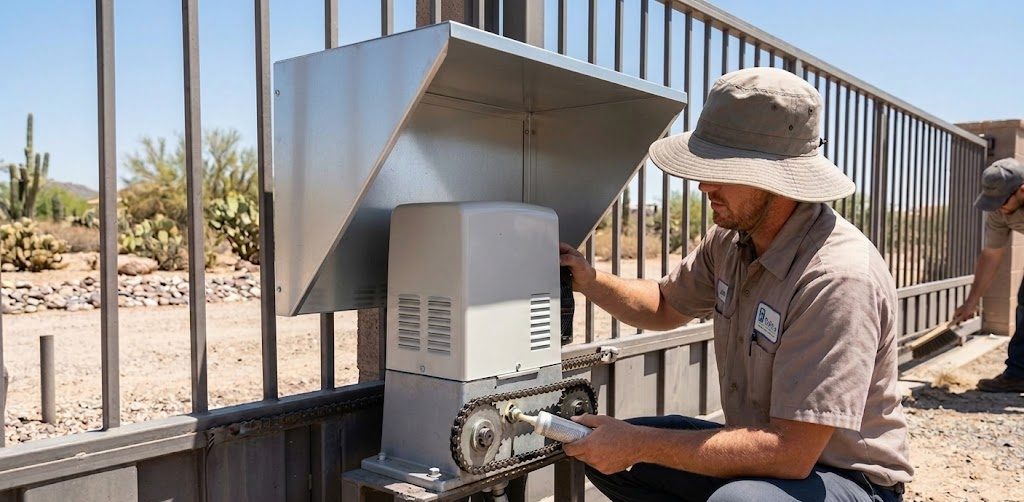
A bi-annual cleaning — removing accumulated dust from the board, cleaning cooling vents, and checking for moisture intrusion — addresses this before it causes a failure. This is a standard component of ParkPro’s
Shade and Thermal Protection — Often Overlooked
Many gate operators are mounted in direct sun with no shading. The operator housing absorbs solar radiation all day, reaching temperatures that exceed ambient by 15 to 30 degrees. A simple shade structure over the operator — a small awning, a mounted shade panel, or a strategically planted fast-growing shade plant — can reduce internal housing temperature by 10 to 20 degrees in peak summer.
This is not a complicated or expensive modification. For operators already installed in direct-sun locations, adding a shade structure is one of the highest-impact steps available to extend motor life without replacing hardware.
Surge Protection — Protecting the Control Board
Arizona’s monsoon season brings lightning activity that creates power surge events capable of destroying gate operator control boards in seconds. A control board replacement costs $300 to $800 depending on the operator. A quality surge suppressor rated for the operator’s electrical specifications costs $50 to $150.
Surge suppressors degrade with each event they absorb. They need to be tested and replaced on a schedule — typically every two to three years for properties in Arizona’s active monsoon zones. A depleted surge suppressor provides no protection, and many property owners do not realize their suppressor has already been exhausted by previous events.
When Prevention Is No Longer Enough
Regular maintenance significantly extends gate system life but does not eliminate eventual failure. When a motor has burned out, a control board has been surge-damaged, or a system is simply past its practical service life, replacement is the right move.
ParkPro’s team assesses every
automatic gate repair call with an honest recommendation: repair if the system has meaningful remaining life, replace if the economics favor starting fresh with modern hardware.
ParkPro Keeps Gate Systems Running Through Arizona’s Summers
ParkPro serves residential homeowners, HOAs, and commercial facilities across Phoenix, Mesa, Scottsdale, Chandler, Gilbert, Tempe, and Avondale. If your gate is showing signs of heat-related strain — slow cycles, overheating shutdowns, or failure during peak summer heat — contact the team before a complete failure leaves a community or property without access.
parkpro.com/contact/ to schedule a service visit.