Wired vs Wireless Security Cameras: Which Is Better for Your Property?
Wired security cameras transmit video and receive power through physical cables connected to a recorder. Wireless cameras transmit video over WiFi and typically run on battery or a separate power adapter. For permanent installations in Phoenix, wired systems are more reliable, more heat-tolerant, and produce consistently higher-quality footage than wireless alternatives.
How Wired Security Cameras Work
Wired cameras connect to a recorder either a Network Video Recorder for IP cameras or a Digital Video Recorder for analog via cable. PoE (Power over Ethernet) cameras use a single network cable that carries both the video signal and electrical power. This simplifies installation because only one cable run is needed per camera.
The video signal never leaves the physical cable network. There is no WiFi signal to interfere with, no router to restart, no internet connection required for the cameras to record. Footage goes from camera to recorder continuously, regardless of what is happening with the property’s internet connection.
How Wireless Security Cameras Work
Wireless cameras capture video and compress it, then transmit that data over WiFi to a hub, recorder, or directly to cloud storage. The camera still needs power either from a battery that needs periodic charging or from a wired power adapter at the camera location.
Do wireless security cameras need WiFi? Yes. Without a WiFi connection, a wireless camera cannot transmit footage. If the router goes offline, if the WiFi signal at the camera location is weak, or if too many devices compete for bandwidth, wireless camera performance degrades. In a large property with cameras at the far edges of the coverage area, WiFi signal strength is a real limitation.
Reliability Comparison: Arizona Climate Factors
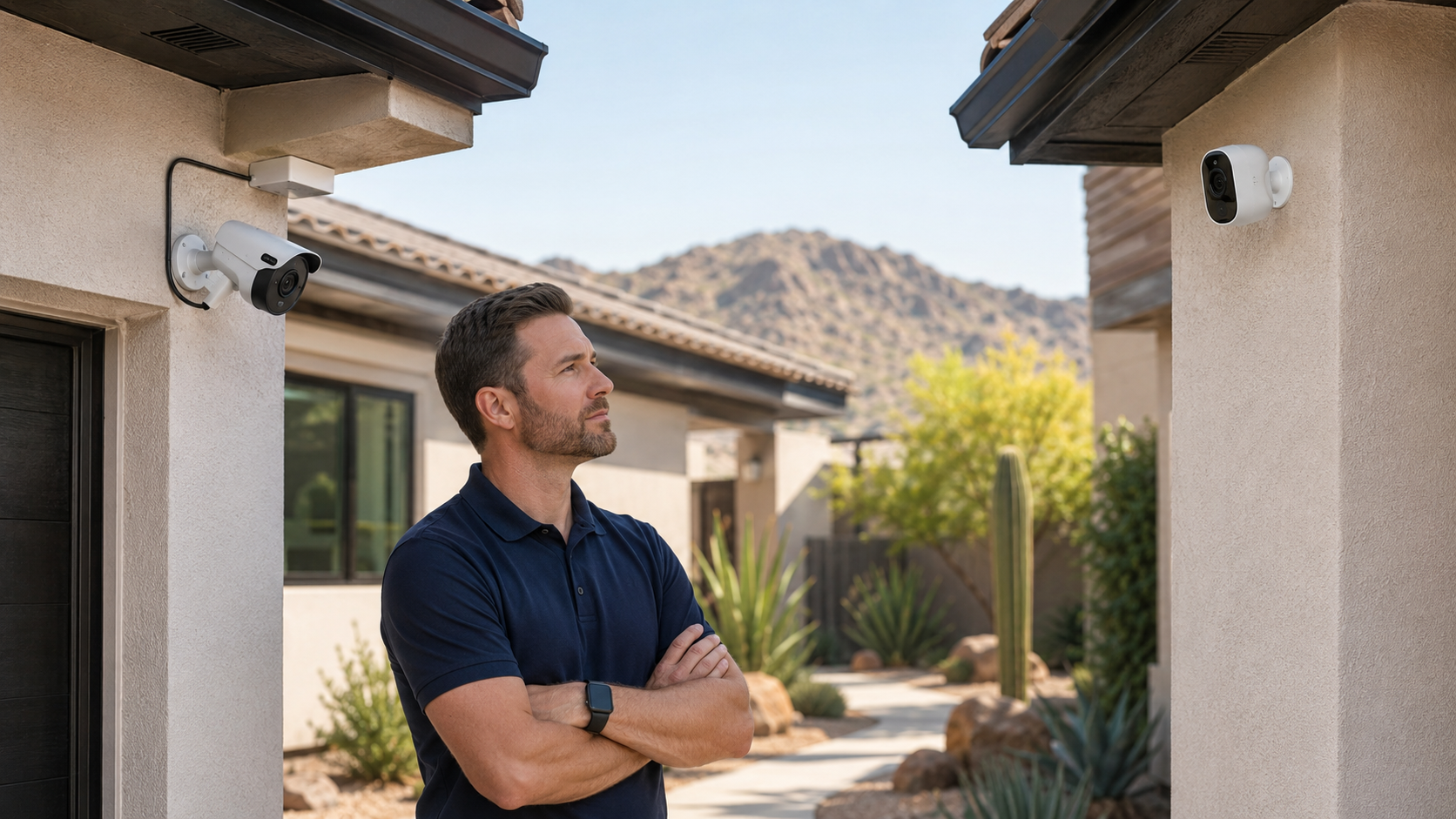
Arizona’s heat puts specific stress on wireless camera systems. Battery performance decreases in high temperatures. A battery that lasts six months in a temperate climate may need replacement every three months when it sits in a housing that reaches 140 degrees in the sun.
WiFi signal quality can also be affected by heat-related interference. More significantly, the WiFi router itself needs to stay in a climate-controlled location a router in an uncooled garage in Phoenix is a reliability problem waiting to happen.
Wired cameras do not have either of these problems. The cable carries both power and data reliably regardless of temperature. The recorder sits in a controlled indoor location. The only heat-sensitive component for outdoor wired cameras is the camera housing itself, which should be rated for Arizona temperatures.
Image Quality: Where Wired Wins
Wireless cameras compress video before transmission to manage bandwidth. This compression reduces image quality compared to uncompressed or lightly compressed footage from wired cameras on a dedicated local network.
For most security purposes, the difference is manageable. For applications where footage quality needs to hold up for law enforcement evidence or insurance claims commercial properties, HOA common areas, high-value residential installations the quality advantage of wired systems is meaningful.
When Wireless Cameras Make Sense
Wireless cameras are a practical choice in specific situations. Properties where running cable is genuinely impractical detached structures with no conduit pathway, rental properties where wall penetrations are restricted, temporary coverage needs. For a homeowner who wants a couple of cameras at specific locations without a full system installation, wireless is accessible and functional.
The decision framework is simple. Permanent installation covering the full property: wired. Supplemental or temporary coverage where cable is impractical: wireless.
The Installation Reality
Wireless cameras are easier to mount because you do not run cable. But every wireless camera still needs power, which means either batteries or a power adapter at the camera location. If a power adapter is needed, you are running an electrical line to the camera anyway at which point a full PoE wired installation is not dramatically more complex.
ParkPro’s
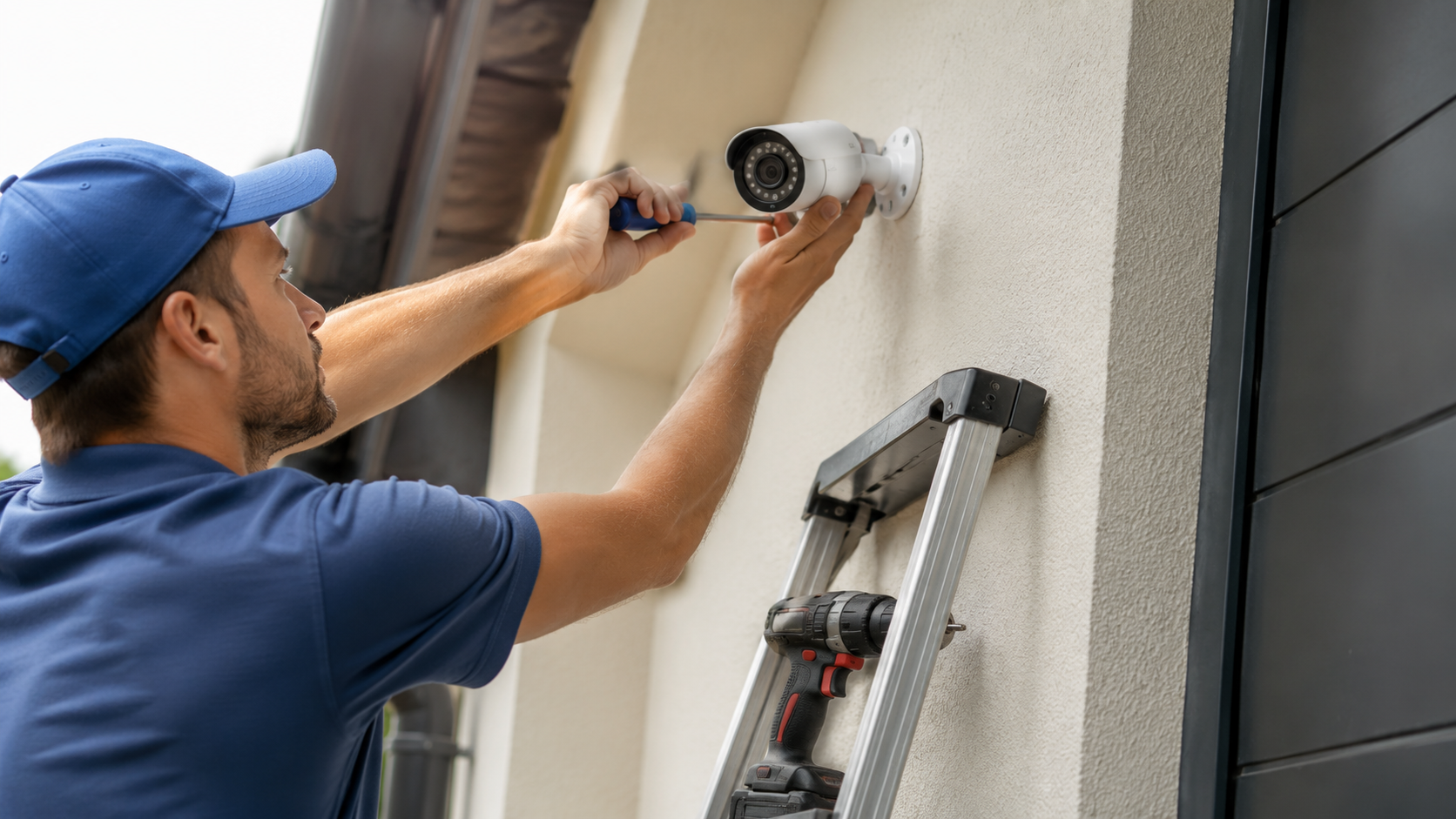
security camera installation service handles both wired and wireless installations across Phoenix. For most permanent residential and commercial installations in the Valley, the team recommends wired PoE systems for their reliability and performance.
Talk to ParkPro About the Right System for Your Property
ParkPro serves homeowners, HOAs, and commercial facilities across Phoenix, Mesa, Scottsdale, Chandler, Gilbert, Tempe, and Avondale. The team will assess your property and recommend the right camera type and installation approach for your specific situation.
parkpro.com/contact/ to schedule a free consultation.